
Scary Books

Mastermind horror author extraordinaire Stephen King has made it known that he intended to write a magnum opus piece at some point in his career. While he has officially dubbed The Dark Tower series as that piece if you were to ask his fans they would largely refer to The Stand as the real magnum opus. Powerful and hard-hitting, his 823-page novel burst onto bookshelves in October 1978 and horror fans instantly blessed it as a classic. Now, forty-one years later one of the most read horror novels of all time is making a big-time comeback.

The Stand Novel Becomes A Miniseries

The origins of the novel are routed loosely around George R. Stewart’s Earth Abides novel, in which nearly all of humanity is wiped out. King built upon this by having an influenza-style virus that’s immune to antibiotics and vaccines, wipe out 99.4% of humanity on Earth. Collectively two groups of survivors are left with the more heroic characters being inspired by a group dream to create a free zone of democracy. The other group which is morally bankrupt descends upon Las Vegas at the behest of semi-Dark Tower resident villain Randall Flagg. King’s novel was raw and visceral with the struggle against what was left of humanity being an epic showdown.

The Stand 1994

In 1994, the ABC network along with former Masters of Horror showrunner Mick Garris put together a Stand four-part miniseries which starred an assortment of Hollywood character actors including Gary Sinise, Molly Ringwald, Miguel Ferrer, Laura San Giacomo, Jamey Sheridan, and Rob Lowe. For a long time now the miniseries has held up well, but a much-needed remake is on the way.

The Stand 2020 Cast and Crew

Fresh for 2020 will be an updated miniseries for The Stand. The premium CBS All Access streaming service will be the producer and streaming platform behind this production. The showrunner for the miniseries will be director Josh Boone, alongside veteran horror executive producers Roy Lee and Richard P. Rubinstein. Writing episodes alongside Boone will be none other than Stephen King and his own horror novel writing son Owen King.

The Stand 2020 Cast

James Marsden, Alexander Skarsgard, Odessa Young, Whoopi Goldberg, Marilyn Manson

As for the leads, veteran X-Men actor James Marsden will play the titular role of Stu Redman. Playing the coveted bad-man role of Randall Flagg will be none other than everyone’s favorite vampire kingpin from the horror show True Blood, Alexander Skarsgård! Rounding out this already star-studded cast is set to include, Greg Kinnear, Amber Heard, Whoopi Goldberg, Henry Zaga, Daniel Sunjata, Odessa Young, and even shock rocker Marilyn Manson!

This sprawling ten-episode series will premiere sometime in late 2020, and even Stephen King himself has promised that the ending to this version of The Stand will extend beyond what he originally ended his novel with and is set with a new, and far-reaching ending that horror fans just won’t see coming.

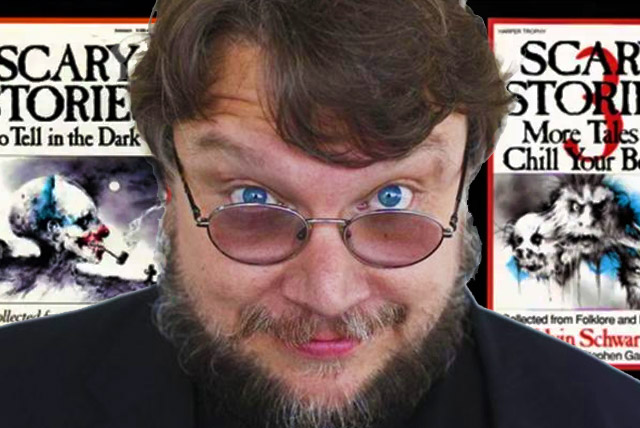
Guillermo Del Toro’s films are always among the best made in Hollywood. With Academy Awards and legions of adoring critics, the somewhat reclusive director always manages to stay faithful to the horror film genre. Here are 6 need to know facts about the horror director’s latest production, Scary Stories To Tell In the Dark.

Production on Scary Stories To Tell In the Dark has officially wrapped

Guillermo Del Toro’s Scary Stories To Tell In the Dark

Not only is post-production on the film virtually completed as of December 2018, but the film also has an official release date of August 9, 2019, from Lionsgate Films.

Guillermo brings the Saw

Guillermo Del Toro’s Scary Stories To Tell In the Dark

Writers Patrick Melton and Marcus Dunstan

It is no secret that Guillermo Del Toro is not directing the film, but has instead shifted his duties to producing and writing the screenplay. Alongside him in the screenplay writers room are veteran screenwriters Patrick Melton and Marcus Dunstan. Those names sound familiar? They should because they’re the infamous horror writers behind the SAW film franchise series. As far as directing goes, Del Toro entrusted Andre Ovredal with the film. If his name sounds familiar that’s because he’s the director behind 2010’s cult hit, Trollhunter.

Children’s Stories?

Guillermo Del Toro’s Scary Stories To Tell In the Dark

Del Toro, Melton, and Dunstan are not solely responsible for the plot of the film. Scary Stories To Tell In the Dark is actually a children’s horror novel of the same name. The original novel was a series of three children’s books written by author Alvin Schwartz and magnificently illustrated by the great Stephen Gammell. Written for the scope of the preteens, the books are also anything but subtle. Such terrifying stories as Hearse Song and Ghost With Bloody Fingers are still horror classics.

Scary Stories To Tell In the Dark Cast

Guillermo Del Toro’s Scary Stories To Tell In the Dark

Actors Dean Norris, Lorraine Toussaint and Gil Bellows

Casting has been made known. Actor Dean Norris of AMC’s hit show Breaking Bad, has been cast in a secret role. Lorraine Toussaint from the popular Netflix show, Orange Is the New Black, is cast and rumored to appear in a very paranormal capacity. Gil Bellows, fresh off of Amazon’s Patriot and remembered by many as the young inmate, Tommy, in The Shawshank Redemption,  has been cast in an unknown role.

Guillermo Del Toro’s Scary Stories To Tell In the Dark

As the heart of the film will revolve around a teenage ensemble comprising of mostly unknown young actors and actresses such as Zoe Colletti, Michael Garza, Austin Abrams, Gabriel Rush, Austin Zajur and Natalie Ganzhorn.

It’s a Secret!

Guillermo Del Toro’s Scary Stories To Tell In the Dark

On the set of Scary Stories To Tell In the Dark

Lionsgate and Del Toro have gone to incredible lengths to keep the plot lines in the film as secret as possible. The only official plot point that has been leaked revolves around the main character named Stella, who along with her friends are blamed for a Halloween prank, only to find out that something far more sinister and terrifying is responsible and hiding out in their town.

Keeping the look and feel of the books?

Guillermo Del Toro’s Scary Stories To Tell In the Dark

In late August 2018, a fan of the book series reached out to Del Toro on Twitter, asking as well as begging him to confirm that the scary and terrifying illustrations of the book series drawn by Gammell will be preserved and shown in the film. Ever the minimalist, Del Toro replied with only the word “yes”.

August 2019 can’t come fast enough and for the legion of fans hoping for the first big-screen glimpse of the terrifying, Harold the Scarecrow!

The city of Los Angeles has thousands of real-life stories of actors and actresses who venture there seeking fame and fortune in the film world. For the large majority of them, they are dismissed after tense auditions and forced to either seek other opportunities in the film world or just give up the notion altogether. In 1947, Elizabeth Short was one such aspiring actress, whose big break never came. Along with Hollywood’s rejection, her dismembered and blood-drained corpse was found lying in the middle of a busy Los Angeles street. The most famous and unsolved murder of the time was to become known as the Black Dahlia Murder.

Elizabeth Short

Elizabeth Short - The Black Dahlia

Elizabeth Short born in 1924, was a native of Boston, Massachusetts. She was one of five daughters born to her parents Cleo and Phoebe Short. Living a middle-class lifestyle at a young age was about to come to a screeching halt as the Stock Market Crash of 1929 had the family reeling. Shortly thereafter, Cleo went missing. It was thought that he had committed suicide as his car was found abandoned on a nearby bridge.

However, in 1942, Phoebe received a letter from Cleo stating that he was in fact very much alive and had fled to make a better life in California. At the time Elizabeth became diagnosed with an asthma condition and at her doctor’s suggestion, a move to California would be beneficial to her health. A year later she joined her long lost father near the San Francisco Bay area. The relationship didn’t last long, and having such a great affinity for films, Elizabeth struck out for Los Angeles.

During the days, Elizabeth hit as many auditions as she could seeking any part that was available for stage or screen. In the evening, she moonlighted as a cocktail waitress trying to make any connection to an agent or producer that she came across. Distracting her from her goal as an actress was an aspiring married salesman named Robert Manley. Much about their relationship was unknown as they were known to travel to San Diego at off times for small getaways. January 9, 1947, after a return trip from San Diego, Manley dropped Short off at the Los Angeles Biltmore Hotel where she was to meet her sister who would be flying in from Boston for a visit. This was the last time Manley saw her alive.

The Black Dahlia Murder

The Black Dahlia Murder

On the morning of January 18, 1947, a woman and her daughter out for a morning stroll to nearby Leimert Park, came across a most unusual body on Norton Avenue in the grass area. At first, she perceived the body to be that of a department store mannequin because of its dismembered and stiffened limb appearance. Upon closer inspection, the woman realized it was no mannequin, but that of a human. The Los Angeles Police Department responded and investigated the scene.

The body was that of a white female who had been completely sawed in half at the waist. Medical examiners found that the body had been completely drained of blood, thus giving the corpse a bright white appearance. The body parts had been scrubbed completely clean with was what presumed to be a gasoline-like substance that eliminated any stains. One and a half feet away, the lower torso was found in relation to the upper one. The intestines from it were folded and neatly tucked underneath the buttocks of the corpse. Various two-inch slices and gashes to both the upper and lower torso were made by a knife of some type. The most disturbing was that the killer used this same knife to slice the upper cheeks of the mouth on the corpse, giving it a very elongated and grotesque smile.

An autopsy revealed the official cause of death to be hemorrhaging caused by head trauma. Short was positively identified via her fingerprints that matched up with an arrest in 1943 for petty crime. Journalist William Randolph Hearst’s The Examiner newspaper gave her the name of “Black Dahlia” as they had discovered she had last been seen wearing a tailored black suit dress that paired well against her jet black hair that was often seen with a freshly plucked dahlia flower in it.

The Black Dahlia Murderer Announces Himself, Kind Of.

The media sensation was immediate and her death became among the first in Los Angeles to be heavily publicized in hopes of finding clues that may lead to the killer. Just days after death was in the news, James Richardson who was the editor of Hearst’s Examiner received a very bizarre phone call from a man. He claimed in no uncertain terms to be Elizabeth Short’s killer and stated he wanted to soon turn himself into the local authorities. But not before he mailed Elizabeth’s personal items to their newsroom.

The Black Dahlia Murder

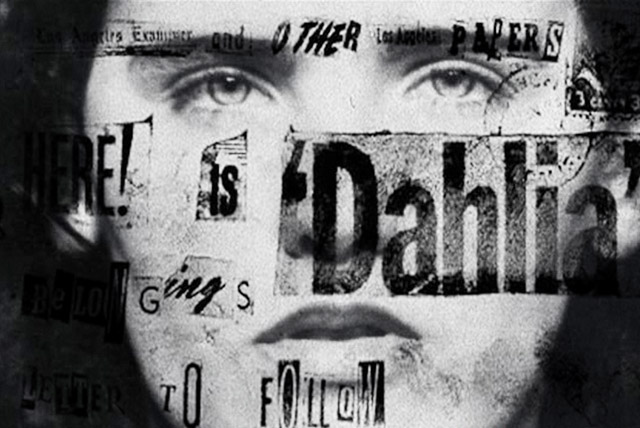
On January 24, 1947, a United States Postal employee discovered a rather large envelope that was addressed to The Examiner. What made the discovery so bizarre is that there was no physical handwriting to it. Instead, a mishmash of newspaper and magazine letter cutups were used to address the envelope so that the handwriting and return address could not be validly traced. Los Angeles Police was called and the envelope was opened and its contents were shocking.

Inside was Elizabeth Short’s birth certificate, an assortment of photographs, business cards, an address book. Even stranger was the fact that the items were thoroughly cleaned with gasoline similar to how Elizabeth’s body was found. A latent print was discovered on the inside envelope lip and it was sent away to the FBI forensics lab for testing only to be determined that the results were inconclusive and matched to nobody.

At the exact same time that the envelope was delivered to the examiner, exactly two miles away on Norton Avenue where Short’s body was discovered, her handbag and matching pair of black suede shoes were placed atop sidewalk garbage. As police collected the evidence, the smell and presence of gasoline further confirmed that the killer had made the extra effort to see that these were void of traceable fingerprints as well. However, there was one key piece of evidence, the address book.

Who Killed Elizabeth Short?

Police quickly recognized the name of Mark Hansen in the address book. He was known in Los Angeles as a very wealthy theater and nightclub entrepreneur. Short had been a frequent patron of Hansen’s establishments and known to be seen alone with him. Things soured one evening when she spurned his sexual advances. Hansen was interviewed thoroughly by detectives, but ultimately had numerous alibis that had placed him somewhere else at the time of Short’s murder.

Combing through the address book, detectives confronted and interviewed a staggering one hundred and forty-seven potential suspects. Investigators from the Sheriff’s Department as well as California State Patrol offered their assistance, including the FBI as well. Local politician Lloyd Davis offered a staggering ten thousand dollar reward for information leading to Short’s killer. This was a controversial move as it further muddled the suspect pool as many people desperate for cash turned over a multitude of names.

Hope seemed to be waning until The Examiner received another contact from Short’s killer. No mashed-in newspaper cutups, this time the letter was handwritten and bizarrely stated,

“Here it is. Turning in Wed., Jan. 29, 10 am. Had my fun at police. Black Dahlia Avenger”.

Toying with authorities that the killer would turn themselves in, police eventually agreed the killer had no real intentions of doing so when The Examiner received another handwritten letter saying,

“Have changed my mind. You would not give me a square deal. Dahlia killing was justified”.

The Black Dahlia Murder

Dr. George Hodel

Theories on just who might be the killer had detectives scouring any and all Los Angeles contacts who associated with short. Sensational yellow journalism sparked a controversy that Short was a prostitute who spurned the wrong client, others labeled her as a nightclub tease who went too far at teasing men.

Leads and false confessions finally had police at a complete dead end. The final step at a lead came with examinations to Short’s body since her torso had been meticulously cut in half, the local medical schools were looked at as the killer could possibly have been in a doctor. Dr. George Hodel was rumored to be involved as a grand jury report from 1949 contained an actual wiretapping recording of his phone where he all but said that he was the killer.

Did the bellhop kill her?

Over the years the unsolved crime faded away as others popped up that took over the headlines. One of the most absolute and lasting suspect theories out there involves a bellhop for the Biltmore Hotel. Leslie Dillon worked for the hotel as well as being a former mortician and turned out to be friends with earlier suspect, Mark Hansen. Further research believed that Hansen, who incidentally trained as a medical student in Sweden years prior, helped murder Short along with Dillon.

The Black Dahlia Murder

Leslie Dillon

The prevailing theory is that Short discovered, through her friendship with Hansen, that he and Dillon were going to defraud a series of hotel investors. When she learned too much of his crime with Dillon, they are believed to have killed her in the Aster Motel of Los Angeles. The morning Short’s body was discovered, the owner of the motel had discovered that overnight one of his motel rooms had been festooned with an abnormal amount of blood and other bodily fluids. This motel was only a mere two miles from the site of where the body was discovered. Whether it was Dillon or Hansen that possibly murdered Short in that particular motel has never been conclusively proven.

To this day, the case remains both unsolved and unofficially open as a cold case. Not long after her murder, a California lawmaker taken aback by the potential sex slaying crime insisted that a formal registry of sex offenders be kept. This was to be the first ever sex offender registry created in the United States. Short’s body was interred in a cemetery in nearby Oakland, California and to this day, visitors of all types pay their respects and are infamous for leaving bundles of dahlias there on the headstone as a somber and respected tribute.

TNT’s I Am the Night

TNT is taking a shot at telling the Black Dahlia story when it releases the series I Am The Night on January 28th. The series will focus on the facts of the Black Dahlia case and will be told through the eyes of Dr. Hodel’s granddaughter, Fauna Hodel. Inspiration from the show comes from Fauna’s book she wrote about the murders, One Day She’ll Darken.

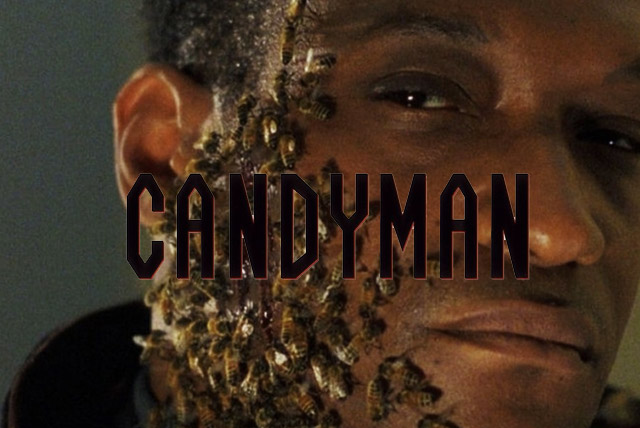
Looking to scare up more audiences for a new generation, here are 5 fast need to know facts about the newest horror film, Candyman.

Yes, the film is happening!

Candyman 2020

It has been years since a new Candyman film was released, with the most recent being Candyman: Day of the Dead that was released on DVD and yes….on VHS in 1999! Since then fans of the film series have been long begging Hollywood for a new chapter and they will be getting one! Better yet, it will be a theatrical release (no VHS release so don’t worry) and there is an officially confirmed date of June 12, 2020.

Jordan Peele is Directing

Candyman 2020

Academy Award winning writer and director of the 2017 smash hit, Get Out, Jordan Peele will be writing and directing the latest installment of the film series. It is set to be produced in house by his production studio, Monkeypaw Productions and fronted by Universal Pictures, so horror fans can breathe easy knowing that their beloved franchise is in the hands of one of the top filmmakers in the Hollywood motion picture world today.

Who is playing Candyman?

Candyman 2020

Die-hard fans of the series and the horror cinema world have a special place in their heart for the original Candyman actor, Tony Todd. He brought a particular haunting majesty to such a terrifying character. Will he be in the newest film to reprise his role as Candyman? Or perhaps cameo? Flashback? As of right now, Todd’s role in the new film has not been decided and a new Candyman has not even been cast. Director Jordan Peele has taken such an extreme measurement to keep the plot and future casting decisions under wraps.

What are the original Candyman actor, Tony Todd’s thoughts on the new film?

Candyman 2020

According to a recent interview he said,

“I’ve got so many other options that even if they make it without me, which I doubt, the attention the new movie will create will lead folks back to the original film because people like to see the source material. In 2018, I think there are a few neighborhoods that could use some Candyman justice, you know what I’m saying? I’m just happy that as an African-American man, that Candyman has once again been given the nod to enter people’s consciousness”

.

Books of Blood

Candyman 2020

Candyman is actually a creation of literary horror genius Clive Barker. It was taken from one his infamous Books of Blood anthologies called The Forbidden. The 5th Series of Books of Blood took place in England where a young graduate student stumbles across the feared urban legend of Candyman while writing a university thesis. Clive Barker in fact wrote and produced the 1992 smash hit horror film himself.

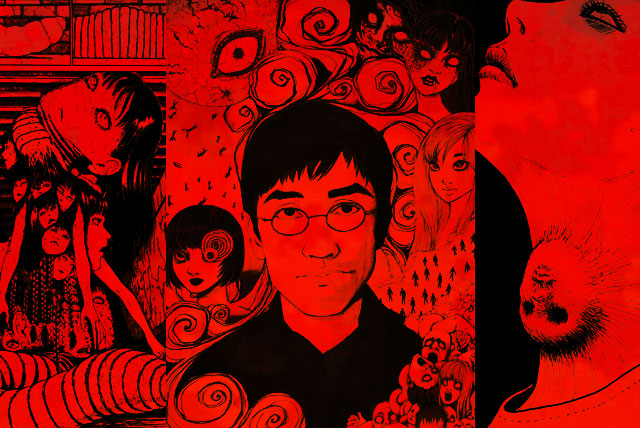
Junji Ito is one of the great masters of horror in manga. If Stephen King was a horror manga artist, he would be Junji.  The parallels between King’s nightmarish landscapes and heavy-hitting works like Uzumaki, where a town literally spirals into destruction, Tomie, who is arguably one of the most famous contemporary femme fatales in Japanese literature, and Gyo, which twists a tale of science gone too far into a depiction of unrecognizable horror.

Ito’s iconic contributions to the genre have been acknowledged worldwide, especially by fellow terror icon Guillermo del Toro, who initially had Ito as a collaborator on the Silent Hills video game alongside game designer Hideo Kojima, before the project was canceled a year later by Konami.

Ito’s collection of work is vast, but thankfully, here at FrightFind, we know just the right stories to pull from this library of horror to leave you with chills… if you’re brave enough to even read these disturbing short stories.

Glyceride

Junji Ito - Glyceride

At this barbecue shop, pray that you won’t have to pay an arm and a leg for a plate. This story, from Chapter 5 of Ito’s Voices in the Dark, is not for the faint-hearted or those with a weak stomach: our heroine, Yui, lives with her family in the building that also houses their quick-eats restaurant. Unfortunately, the environment is less than clean, with grease and sweat and oil quickly accumulating throughout the shop, and eventually on Yui and her family members due to a lack of ventilation. As the “saturation level,” as Yui calls it, continues to rise, so do the tensions between Yui, her bullied brother who increasingly takes out his violent temper on her and their father — whose dedication to the shop shows signs of turning sinister.

The Bully

Junji Ito - The Bully

Who is that one person you regret picking on and never apologized to? If you had the chance to say “sorry,” or something else entirely, what would you do? Kuriko’s story is a twisted exhibit of revenge in Chapter 11 of Ito’s Museum of Terror, Vol. 3. This demented tale begins with a conversation between Kuriko and her boyfriend Yutaro, to whom she tells the story of how she befriended a younger boy named Nao after she was rejected as a child by a youthful Yutaro and his friends when she asked them to play with her. However, Kuriko’s resentment at the rejection bleeds over into her treatment of Nao, whom she ultimately bullies to the point that he leaves town. The conversation, and this story, takes the first dark turn of many when Kuriko reveals that a certain someone from her past has come back into her life.

Dissection Girl

Junji Ito - Dissection Girl

Here is another story of childhood friendship gone seriously wrong. In chapter five of the Fragments of Horror anthology, Tatsuro Kamata is trying to make his way through medical school with his stomach intact as his class approaches their toughest assignment yet — dissecting a human body. However, upon opening the body bag, they are shocked to discover an extraordinarily pretty woman… who is alive. After a series of bizarre demands for the class to dissect her anyway, she runs off when the leading professor threatens to call the authorities. Tatsuro, in shock from the ordeal, is hit with another realization: he knows Ruriko Tamiya, who now has the reputation of “Dissection Girl,” from a brief, but traumatizing friendship they had as children eight years ago. Their story is far from over, and unfortunately for Tatsuro, Ruriko remembers him too.

Black Bird

Junji Ito - Black Bird

Sometimes, bird-watching takes an interesting turn… but be careful with what you wish for. Kume, an avid avian observer, is in the forest when he hears a cry for help. Finding a badly injured man at the scene, Kume gets help for the man, who identifies himself as Shiro Moriguchi from Tokyo. Apparently, his mountain trip took an unexpected turn when he took a bad fall in the wilderness and was able to survive off of his rations supply. Moriguchi also insists that he does not have a job, family, or friends to contact. Kume agrees to support the traumatized Moriguchi, but has some hesitations. With this mysterious patient, things are quite murky until a bizarre hospital visitor arrives, who soon reveals the secret behind Moriguchi’s salvation from his sure death in the woods… if it can even be called that. Let’s just say that you would be better off not being under this bird’s wing.

Secret of the Haunted Mansion

Junji Ito - Secret of the Haunted Mansion

For those familiar with Junji Ito’s cast of the horrifyingly demented, this story features Souichi. Whereas his other stories depict him in his boyhood — or something like it — with an often-clumsy interest in the occult and attempts at taking revenge on his well-meaning family, Souichi is a grown man in Chapter 4 of the Voices in the Dark collection. Thankfully for Souichi, and unfortunately for everyone else, he is doing pretty well and has opened up shop with a haunted house in a small town. Two young boys, a pair of friends named Kouichi and Satoshi, are naturally curious about the new attraction. And who wouldn’t be curious — especially with the swirling rumors that soon devolve into all-consuming horror when the truth about the mansion is revealed.

Stephen King is as synonymous to horror as Elvis is to Rock and Roll. With over 50 novels, 235 writing credits and 58 feature film and television adaptations that span the genres of horror, drama, fantasy, crime thrillers, and science fiction, King is one of the most diverse and prolific writers ever.

His body of work needs little introduction. Beginning with the novel Carrie in 1974 and expanding to recent releases of The Dark Tower and IT, King has entertained readers and cinema fans alike for decades.

Yes, Stephen King himself needs no introduction…
The Stephen King Universe on the other hand…well, that gets a bit more complicated.

The Stephen King Universe Explained

If you’re even a casual King fan, you’ve probably already noticed his frequent use of Maine in his novels. As a native of Portland, Maine, King tends to center most of his attention on his home state, albeit in various fictional towns.

If you’re a bit more advanced in your fanaticism, you’ve probably noticed some of those fictional towns overlap. Derry, Maine is not only home to the world’s worst birthday entertainment, Pennywise the Dancing Clown, but also claims Misery‘s tortured novelist Paul Sheldon. If that weren’t enough, the town plays host to an alien invasion in Dreamcatcher and is the setting of King’s time-traveling sci-fi thriller, 11/22/63.

But Derry isn’t the only location pertinent to 11/22/63. Also mentioned in the novel? Shawshank Prison. That’s right, Morgan Freeman, Rita Hayworth…that Shawshank Prison.

Okay, okay, so that’s two locations over a handful of novels and movies. Maybe King just likes Derry? Maybe he just threw the Shawshank label in there because he didn’t feel like Googling a prison name generator. Which, by the way totally exists. We got “Frozen Time Medium Security Prison” which… completely makes the case for just re-using Shawshank. By the way, did you know that Shawshank was filmed at the very real Ohio State Reformatory?

The real Shawshank prison isn’t the only King local that you can visit. Next time you go on vacation, why not spend a night at The Stanley Hotel, The Timberline Lodge, The Ahwahnee Hotel, or The Mohonk Hotel? All of these hotels hold great significance to King’s masterpiece, The Shining. Speaking of The Shining, get ready for the Shining 2, AKA Doctor Sleep, to hit theaters in 2019.

But I digress, the point is: No, King wasn’t just being remiss when he reused those locations. In fact, those stories are just a tiny segment of an elaborate, sprawling, very intentional Stephen King universe.

This universe is so intricately connected that fans have even made flowcharts and graphics in order to make sense of it all.

Courtesy Gillian James

MASSIVE, right? But that’s not all. In fact, to understand those charts you have to go back even further. Back to the beginning. Not just with King’s first novel Carrie, either. Back to the real beginning of the whole. entire. universe.

The Basics of the King-dom

If those flowcharts overwhelmed you, then let us help. If they intrigued you, stick around anyway, you’ll enjoy this too.

Just like every good story needs a beginning, it kind of goes without saying that 54 interconnected stories are going to need a super beginning. And that’s where Prim comes in.

Prim is the primordial chaos of which everything in the King universe arose. It is the darkness behind everything, a vast expanse of nothingness filled with all manner of demons and monstrosities. Unlike our own universe which is constantly expanding, Prim is receding. Due to its recession, it often ends up leaving very unlikable characters dropped off on the physical shores of the various worlds in King’s reality. (See IT below.)

From Prim arose Gan and the Six Beams. Gan is a godlike creator being who spun the physical universe from his naval, everything that exists including a structure called The Dark TowerThe Dark Tower acts as the physical embodiment of Gan and is the structure referenced in King’s self-proclaimed magnum opus, The Dark Tower series. The Dark Tower connects to the Six Beams mentioned above, which are guarded by 12 totem guardians. The Dark Tower and Six Beams are literally the framework for the entire space/time continuum.  But wait, we’re literally just getting started.

So The Dark Tower exists in a place called “All-worldwhich is a parallel universe to our own. All World is made up of 3 regions, “In World”, “Mid World” and “End World”.  It’s home to Roland Deschain, the Gunslinger from the Dark Tower series and one of a long line of peacekeepers that patrol All World. But that’s a discussion for later on.

Parallel King Universes

Before we get too far into character introductions, we should probably go ahead and introduce you to the various worlds that make up the physical Stephen King Universe.

We’ve already mentioned the significance of All World, but All World is also the parallel reality to our own territory, Keystone Earth.

Keystone Earth is where you and I and yes, the architect behind all of this – Stephen King himself, resides.

Then you have the Territories, which are another parallel reality, home to Jack Sawyer from The Talisman and “twinners”, parallel individuals to all of us on Keystone Earth.

There are also two unnamed universes linked to Tak, a demonic entity that appears in both The Regulators and Desperation.
There also exists a string of connected micro-universes that can all be heaped together as simply UR, which is also the title of Stephen King’s Amazon Kindle exclusive, UR.

UR is made up of the following: UR 17000, UR 88416, UR 117586, UR 100000, UR 2171753, UR 4121989, UR 6201949 and UR 7191974. The entirety of UR is only accessible through an artifact known as Lil Pink, which we’ll get into below.

And who says the universe needs to be physical? Enter Boo’ya Moon. Boo’ya Moon is the dream world featured in King’s novel Lisey’s Story.

And what exists between all of these universes? Well, obviously Todash. Todash is a nasty little area of space that is populated exclusively with monsters. It acts as the limbo between all of the above-mentioned worlds and it is a place you definitely do NOT want to get stuck in. Remember The Mist? Well, Todash is where all those writhing tentacles and spiders with human teeth live permanently. Seriously, it’s not the place you want to be.

Stephen King Universe Artifacts

If you’re going to create a reality with hundreds of overlapping and interacting universes and characters, you’re going to need to give them a way to interact. Enter, Stephen King’s artifacts.

The first and probably most important artifact is Maerlyn’s Rainbow.

Maerlyn’s Rainbow is actually thirteen colored spheres. Twelve spheres representing the guardians of the beams, and one sphere, called “Black Thirteen” which represents the dark tower itself. Maerlyn’s Rainbow was actually created as a trojan horse, gifted by a sorcerer named Maerlyn to Arthur Eld (who we’ll get to in a minute) at the beginning of his rise to power. Each of the colored orbs contains a set of demons that aid Maerlyn in bringing chaos to the worlds. The orbs are indestructible and despite being cursed to bring despair upon those who wield them, they are sought after for their powers; telepathy, levitation, the ability to see into the future and of course, the ability to travel between universes.

Another artifact is the aforementioned Talisman, a crystal sphere, from the novel of the same name.

And last but not least, the adorably named Lil Pink. Featured in Kindle exclusive novella UR, Lil Pink is the name of a pink cased, Amazon Kindle e-reader owned by Wesley Smith after a shipment error landed the item in his possession. Through the device, the reader gains access to over ten million alternate realities, or “Urs”.

King Terms and Characters

Now that you know the universes and how to travel to them, it’s time to learn some key terms and players.

The Red – AKA: The Outer Dark. Basically everything evil. The leader of the Red is a character called Crimson King. He has some major beef with Gan and subsequently The White. The inhabitants of the Red are hellbent on the destruction of the Dark Tower and its beams.

The White – The opposite of The Red and basically consists of everything good. The White represents unity, wholeness, and health. Its inhabitants are allied together to protect the Dark Tower and the beams.

Crimson King  – Mentioned before, the Crimson King is the product of a love affair between Arthur Eld (see below) and a demon from the Prim called the Crimson Queen. He’s a really, really bad dude. How bad? Well, his end goal is to destroy the entire space-time continuum just so he can live in “primordial chaos”. Crimson King has had multiple appearances or mentions in works like The Gunslinger, Insomnia, Black House, Dark Tower, The Long Road Home, Treachery, The Gunslinger Born and Low Men in Yellow Coats.

The Stephen King Universe

Arthur Eld – King Arthur. No, really. That King Arthur. Also referred to as “Ancient King of All world” and the “Warrior of The White.” And as if being King Arthur in one universe isn’t enough, he’s also a member of the familial line of Deschains, of which “gunslinger” Roland is a descendant.  In fact, the infamous Excalibur was melted down just to make Roland’s guns.

Roland Deschain – Peacekeeper and Mid World’s last gunslinger who works to protect the Dark Tower and All World from destruction. In pursuit of “The Man in Black” throughout the Dark Tower series.

The Man In Black – AKA: Randall Flagg, AKA Richard Fry, AKA about a thousand other names with the initials R.F. but for clarity’s sake we’re going with Randall.

Randall Flagg is a sorcerer and servant of The Red. He typically leaves destruction and chaos in his wake and has been featured in nine of King’s novels. You’ve seen him in The Stand, Eyes of the Dragon, Hearts in Atlantis, The Dark Tower series and Gwendy’s Button Box.

IT – We know, we know – everyone already knows about Pennywise, the wisecracking clown of our nightmares. But Pennywise the Dancing Clown was only one physical manifestation of IT. IT is actually a terrifying, human eating, shape-shifting entity from the Prim. IT is millions of years old with no discernible gender or identity, hence the term “IT”.

The Shop – A spooky, Illuminati-like, government entity directly responsible for Charlie Mcgee’s pyrokinesis in Firestarter, cleanup and investigation of the events in Tommyknockers, briefly mentioned in The Stand and alluded to as the entity responsible for the Arrowhead Project in The Mist.

The Stephen King Universe

And last but not least, Stephen King.  That’s right! Stephen King is actually a character in his own novels. As we mentioned, Keystone Earth is the home of King, but stick with us because it’s about to get meta.

Stephen King doesn’t just write for our entertainment, no, we owe him a lot more than that. King writes to prevent the downfall of our entire universe. You see, Roland Deschain can’t save the Dark Tower or the beams on All World if he doesn’t have someone writing him that way, so King was handpicked by Gan to be the facilitator for Roland and his adventures. If King doesn’t write, Roland can’t act, and if Roland can’t act then goodbye Gan and goodbye world as we’re all flung into chaos.

So there you have it! You’ve officially covered the basics of the Stephen King Universe.
Basically, to sum it all up Stephen King is the protector of the universe, IT isn’t just a clown and those flowcharts hopefully make a lot more sense to you now.

If you still haven’t got your fill of the King-dom, hold tight, 2018 is shaping up to be a pretty good year for King and his fans and in the meantime, let us know in the comments below your favorite Stephen King connections!

The past couple of years have been incredibly kind to Stephen King fans, with 2017 bringing no fewer than three of King’s classics to film and television, and if you’re a fan of the horror King, you’ll be pleased to learn that there’s seemingly no slowing down this train of terror.

And one of the most recent King novels to get a green light for the big screen? None other than Doctor Sleep, the fan-requested 2013 sequel to The Shining that Stephen King originally dreamt up while staying at the haunted Stanley Hotel.

What is the Doctor Sleep Plot?

Doctor Sleep picks up years after The Shining’s traumatic events at the notorious Overlook Hotel, following a now adult Danny (now just Dan) Torrance. After the tragic death of his father and later mother, a down in the dumps Dan slipped into the same pattern of alcoholism and anger that had so plagued his father years before.

After hitting a hard rock bottom that resulted in an accidental death, he picks up and moves to New Hampshire looking for a new start. The newly sober, middle-aged Dan finds employment at a hospice where he finds new meaning and sobriety, as well as a renewed sense of “shining” that had previously been dulled by his alcoholic tendencies.

Doctor Sleep - Shining Sequel

Is this sounding too positive to be a Stephen King novel? Then it will come as no surprise that Dan’s new life quickly takes a turn for the worse.

Torrance dubbed the titular Doctor Sleep for his ability to calmly ease his dying patients into the next realm. He soon meets a psychic young woman named Abra who shares his “shining” abilities – only to learn that they aren’t the only ones with otherworldly powers.

Dan is quickly pulled into the insanity that follows the girl, primarily, a terrifying group known as the True Knot – a group of psychics that feed off of the life energy of spiritually inclined children.

The Shining Sequel That Almost Wasn’t

The Shining Sequel

King isn’t necessarily known for sequels, usually preferring to delve into new territory with each work that somehow eventually wraps its way back into his massive universe.

However, following the huge success of its predecessor, The Shining, one would think that the horror master would be ecstatic at fans insistence on a sequel. Not so. In fact, fan praise may have almost kept King from writing a sequel much earlier.

King has previously gone on record stating that he was wary of doing a sequel to The Shining, as sequels rarely make as much of an impact as their previous installment and are often fodder for harsh criticism. But after an on-the-road fan poll asking what project they’d be most interested in reading, and some kind encouragement from his wife, Tabitha – King took his fan’s suggestion and rolled with it. Thus Doctor Sleep was born.

Fan Reactions to Doctor Sleep & the Upcoming Film

Fan response to the long-awaited sequel was overwhelming, with Doctor Sleep racking up a stellar 4.1 out of 5 stars with over 125,000 ratings on goodreads.com, so maybe it was a no-brainer that we would eventually get a cinematic version.  Although, without the major success of Andy Muschietti’s 2017 re-imagining of IT, it’s likely that this sequel may not have gotten off the ground quite as quickly as it did. Nevertheless, 2019 seems to be shaping up into yet another Stephen King spectacular.

And Doctor Sleep referred to by King himself as his “return to the balls-to-the-wall, keep-the-lights-on-horror” genre, could be one of the most anticipated releases we have to look forward to.

Gerald’s Game Director “fast-tracked” at Warner Bros.

Netflix's Gerald's Game

Following the warm reception of Netflix and director Mike Flanagan’s “unfilmable” Gerald’s Game, several outlets pegged Flanagan as the go-to director for Doctor Sleep – and Warner Bros. took notice.

Flanagan, a huge Stephen King fan and award-winning editor/director of such films as Hush (2016), Oculus (2013), and Absentia (2011) wowed fans and critics, including King himself, with his work on Gerald’s Game, and had previously called out Doctor Sleep as a novel that he had major interest in tackling.

And now he’s getting the chance – only this go around, he’ll be bringing King’s script, reworked and adapted by Akiva Goldsman, to the big screen. A lament he had previously discussed regarding the controversial aforementioned, straight to Netflix release of Gerald’s Game.

Production is currently said to be underway, and we’ll be bringing you more details on casting (Henry Thomas for an adult Danny, anyone?) and more as they emerge.

When does Doctor Sleep come out in theaters?

Doctor Sleep will hit theaters in 2019.

Thought you knew everything there was to know about Netflix’s Stranger Things? Well, you thought wrong! Read Notes From The Upside Down and you will soon learn that author Guy Adams holds that prestigious title. 231 pages of Stranger Things facts, references, and even fun homework assignments to tide you over. We highly recommend picking up a copy and brushing up before the October 27 release of season 2.

FrightFind got the chance to talk with Guy and find out what’s up in the Upside Down.

FrightFind: What is Notes From The Upside Down and what are you hoping readers take away from it?

Guy Adams: It’s one man’s ramble through eight episodes of lovely television. Picking apart elements of the show, looking at the creation and the cast and delving into the work of the writers and filmmakers (and graphic designers) who inspired it.

Stranger Things Season 2

FF: As I was reading this book I thought to myself “This would make a great website.” Is that what you were going for? Do you want people to experience it like they would have pre-internet? Like Will would have?

Guy: Well, I do sort of joke about that in the foreword. I make the point that there’s possibly no point to a book about a TV show anymore – in a world where we’re drowning in websites and forums discussing everything in minute detail – but here one is regardless. I just wanted to create something that was a fun, open conversation I suppose (albeit a one-sided one, which, frankly, makes it even more like the Internet!).

FF: What are some of your favorites movies and shows that are referenced and is there anything that didn’t make it in to Stranger Things that you wish had?

Guy: I’m awful at picking favorites, I love far too many movies, TV shows and books. All of the obvious reference points – Jaws, Poltergeist, John Carpenter movies, the novels of Stephen King etc. – would certainly count as I adore them.

Stranger Things

Likewise, there’s nothing that I felt was missing. The show does an excellent job of referencing its sources but also standing on its own two feet and that’s a tricky balancing act. That said, the book is filled with other movies I suggest people might enjoy (because I never miss the opportunity to recommend something!

FF: We love all of the homework that you assign at the end of every chapter. What was your intention there? Do you have a background in teaching?

Guy: No, though if there was a course in horror movies I would happily sign up to instruct! The homework sections serve two purposes really, a chance for me to be a bit silly and, again, to share other work I feel fans of the show would enjoy.

If the book serves as a launch pad into a wider world of movies and books for the reader then I’ll consider I’ve done a good thing. I can’t be the only human to own this many shelves, it’s just miserable, I’m determined the rest of you up your game!

FF: Any predictions for Season 2? What’s up with Will? Will Barb come back?

Guy: I would have thought Barb would return, the Internet took her to heart and I’d be surprised if she doesn’t make an appearance of some kind. If she doesn’t though, I won’t mind. Not through any dislike of the character – or indeed Shannon Purser, it’s always good to keep an actor in work – purely because what I really want from the second series is to be surprised.

Stranger Things - Barb

Will is clearly rammed full of alien filth, the poor lad – time will tell if he survives the experience.

I think we’re due to see a lot more of the Upside Down leaking through into our world – the pre publicity suggests as much – but, as I say above, I’m making no bets. I look forward to sitting down, free of expectations, and enjoying the ride.

FF: What’s your favorite Halloween candy?

Guy: The glistening eyes of interviewers on a cocktail stick.

FF: Ouch!

You have seen him shredding on his guitar for years now with super group Metallica, but did you know that Kirk Hammett has a dark and sinister hobby?  He has been collecting horror and sci-fi memorabilia since his youth and now he wants to share it with you. Kirk has just released his new book It’s Alive! showcasing his amazing collection of classic horror movie posters. And if that isn’t enough, the Peabody Essex Museum in Salem, Massachusetts is hosting an exhibition of over 135 works in Kirk’s collection. Check it out through November 26, 2017.

FrightFind had the chance to pick Kirk’s brain and find out what’s going on with It’s Alive!

FrightFind: What is It’s Alive! and what are you hoping readers take away from it?

Kirk Hammett: It’s Alive is my museum exhibition of my horror movie memorabilia collection. The very first museum show of its kind in the history of the world and I’m very proud of the fact I’m actually breaking new ground here.

Kirk Hammett's It's Alive

Kirk Hammett at the Peabody Essex Museum. © 2016 Peabody Essex Museum. Photography by Allison White.

It’s Alive! is a celebration of the artistic and cultural significance of the horror movie poster stemming over decades of time and how impactful these images and this artwork have been on modern culture since the beginning of the age of the horror film – I would say in the teens and the twenties – there has not been any sort of real significant and validation that has ever been done on how beautiful and how artistically great horror movies posters are and have been and so this is a celebration of the beauty of my collection, more so than anything else – and how I find this remarkably significant on many different levels. Cultural, artistic, and creative levels. It’s a wonderful sort of thing I want to bring other people in to. And include other people in on.

FF: What was the first piece of horror memorabilia that started your collection?

KH: Well, I went through a dry period in my collecting when I was a child. I basically stopped collecting stuff when I was twelve or thirteen years old because we had moved out of San Francisco and I’d moved to the suburbs where I didn’t have access to comic book stores. So I ended up being an adolescent in the suburbs with nothing to do. I had whatever stuff was available to me at the time which was watching horror movies on tv and going to the movie theaters but I discovered something else that really took up most of my free time, and that was music. So I went through a dry period between the time I was a kid until the time I was a young adult. In that time period music completely took over my life. I’d say 90% of my life. But I still had a foot in the horror genre. I was still watching horror movies, still reading horror books, still buying the odd monster magazines and comics.

Kirk Hammett's It's Alive - Bride of Frankenstein Poster

The Bride of Frankenstein, 1935, produced by Universal Pictures, lithograph, 26 1/2 x 40 5/8 in. (67.3 x 103.2 cm). Courtesy of the Kirk Hammett Horror and Sci-Fi Memorabilia Collection and Universal Studios Licensing, LLC.

When I got a little bit of disposable income around 1985 I jumped right back in again and the first thing I did was I went down to my local comic book store and I bought a bunch of vintage horror comic books and I took them on tour with me on the ride the lightning tour and I would read them with much pleasure because it was great knowing I actually generated this money through playing my guitar and playing my music to feed my other muse, which was horror. I was back on track from that point on. I started buying horror comic books, toys, props, masks, posters … then around 1989 I remember buying a Bride of Frankenstein half sheet, it’s the one at the Peabody, actually, and just staring at it going my god that’s so beautiful. The images are so iconographic, and it puts so many wonderful thoughts in my head. It was so inspiring. And from that point on I dived head first into to the movie posters. And out of all the stuff, I collect it’s the movie posters that mean the most to me and have the most significance to me outside of the actual movies themselves.

FF: With most collections, it’s not the pieces you have but the ones you don’t that keep you collecting. Are there posters you are still after?

KH: Well, you know in the movie poster world it’s high and dry. It’s not like the comic book world where there’s 10,000 copies of Spider-Man number one. There might very well be 10,000 copies of Spider-Man number one. But a Frankenstein one sheet poster from 1931? There’s only 5 known to exist. And there’s a multitude of horror movies that have no posters that have been found to be attached to them. A good case in point – The Mask of Fu-Manchu. A universal horror picture from 1934 or 1935 and there’s maybe one or two big pieces of paper that exist from that film. Another example, Murder in the Rue Morgue, 1932. There’s maybe three pieces that exist from that film. So there’s a multitude of stuff that is not known to exist until it’s found.

Kirk Hammett's It's Alive - Mummy Poster

Attributed to Karoly Grosz, The Mummy, 1932, produced by Universal Pictures, printed by Morgan Lithograph Company, lithograph, 41 × 27 in. (104.1 × 68.6 cm). Courtesy of the Kirk Hammett Horror and Sci-Fi Memorabilia Collection and Universal Studios Licensing, LLC.

Another case in point is my Mummy three-sheet. That is a one of a kind of piece it wasn’t even found in the States it was found in Sweden. And when something is discovered, and it’s significant, it causes huge ripples in the hobby and all the collectors learn about it within days. So there is a lot of stuff out there that still needs to be discovered. I have a feeling there’s stuff out there a lot of collectors want that will never be found because it just doesn’t exist. But we don’t have any quantifiable answers to any of this because this stuff is so rare. When the stuff comes up, it’s a huge event, and everyone shakes their head, going ‘Wow! Fantastic! One has survived’ and then the race starts on who actually is going to acquire the piece and that gets a bit cut throat.

Then there’s a lot of detective work, a lot of investigating, following leads, dead-ends. Then there’s a bona fide find and when someone actually finds a cache of movie posters, especially say a pre-war, pre-1943 or 44 it’s a big deal. Because it’s pretty much a given that it doesn’t exist or didn’t survive. So when a piece comes through there’s a lot of surprise and shock, but there’s celebration and fanfare at the same time. People staring at the image and digesting and taking it apart. It’s an interesting hobby, to say the least.

FF: So what would be your Holy grail of posters? Would it be from the pre-war period?

KH: Well, yeah. I’m especially partial to the Nosferatu poster. It’s a one of a kind from 1922. It’s not even country-of-origin poster. What I mean by that is when Nosferatu came out Bram Stoker’s widow said ‘This is a rip off of Dracula, destroy all copies!’ And she put out a cease and desist. All copies of the film were destroyed, all movie posters were destroyed. Hence, a German poster, a country-of-origin poster, of Nosferatu hasn’t been found. But the Nosferatu poster I have is from Spain. The cease and desist order did not reach Spain, Nosferatu was distributed in Spain in 1922. I have a Spanish poster just because one just happened to survive. It’s really unique, it’s a great graphic, I love it so much I put it on a guitar. It’s a wonderful piece, and when people see it in person, they’re just like, ‘Wow.’

Kirk Hammett's It's Alive: Nosferatu Poster

Nosferatu, about 1931, produced by Prana Film, Germany, printed in Spain, lithograph, 42 1/4 x 29 1/8 in. (107.3 x 74 cm). Courtesy of the Kirk Hammett Horror and Sci-Fi Memorabilia Collection.

It’s significant, because it’s a color image of Nosferatu, whereas no one really ever sees color images of Nosferatu, ever. It’s always the same old black and white images. Well lo and behold, I have a color image of Nosferatu and it was made by the production company that had to do with the film. And so the colors are most likely very accurate from what they were during filming and that in itself relays so much information on the character of Nosferatu, the production of the film, what the colors actually were. Because it’s hard to glean what color is what because it’s all black and white. So the movie poster of Nosferatu is not only a great graphic and beautiful, but it also informs myself on the film itself in a lot of very subtle ways.

FF: How much, if at all, have horror movies influenced your musical career?

KH: Well, let’s just put it this way … in the area where I have all of my best movie posters I also have an amp and a guitar, and it has been that way for the last twenty-five, thirty years. All I have to do is go into that room, and I just sit there and I play guitar and stare at my movie posters and I’m inspired. I can stay in that room forever, it’s the greatest thing. It’s nothing in particular, but it is a general sort of muse for me, a general source of inspiration.

Kirk Hammett's It's Alive - Dracula Poster

Dracula, 1931, produced by Universal Pictures, printed by Morgan Lithograph Company, lithograph, 41 × 27 in. (104.1 × 68.6 cm). Courtesy of the Kirk Hammett Horror and Sci-Fi Memorabilia Collection and Universal Studios Licensing, LLC.

At the same time, I can’t draw a correlation saying this Frankenstein meets the Wolfman poster is responsible for this riff I’m going to call the Frankenstein meets the Wolfman riff. That doesn’t happen. What happens is I sit in my movie poster room where I’m very inspired and very comfortable. It’s a very safe place for me creatively, mentally, and spiritually. I sit there and I create, and that’s the impact these movie posters have on my own personal creative muse.

FF: What’s your all time favorite horror film?

KH: Okay, that’s a hard one to answer. Like who’s your favorite kid or what’s your favorite song. What’s your favorite food. It changes all the time. I might give you an answer this week but it might be completely different next week because I read an article about a movie and watched it and got super enthusiastic about it, and it gets in my brain so it’s all I talk about for a while. But yeah, I do have a handful of films that I continually go back to, and they’re almost exclusively classic horror movie films. There’s something about that era that always pulls me back. I mean I’ve seen Bride of Frankenstein over 100 times. The Black Cat I think I’ve seen 75 times. The Mummy I must’ve seen over 100 times. Frankenstein, Dracula, I’ve seen both of those movies easily over 50 times each. And I love them, I love them still. I love The Golem, The Cabinet of Dr. Caligari, I love Nosferatu, and then I love a lot of cheesy stuff from the 50’s. Invasion of the Saucer Men is one of my favorite films, Invaders from Mars is one of my favorite films.

Kirk Hammett's It's Alive - The Cabinet of Dr. Caligari Poster

Lionel Reiss, The Cabinet of Dr. Caligari, 1921, produced by Decla-Bioscop, Germany, printed by H. C. Miner Lithograph Company, lithograph, 41 x 27 in. (104.1 x 68.6 cm). Courtesy of the Kirk Hammett Horror and Sci-Fi Memorabilia Collection.

The Black Sleep, which is a weirdo B-movie, or C-movie, that nobody ever gives any significance to is one of my favorite films. We go into the 60’s and I love Rosemary’s Baby. I think that’s such a great film. Then there’s the great Hammer stuff from the 60’s. Then the early 70’s when I was a kid and going to the movie theater, one of my all-time favorite movies is a movie called Equinox, I love that film. I love it so much, I tried to find anything about that movie, and I think I’ve gotten everything on that movie and I’m squeezing the rag trying to get as much as I can out of this Equinox film and I just can’t get enough.

So what’s my favorite horror film? That’s a hard one to answer because I have more than a handful. I love the film Re-Animator, I love the Evil Dead series, I love the Hellraiser series. I love werewolf films, I love films about Bigfoot and giant monster films. So I can’t really answer that question.

FF: What do you think about all of the recent remakes and reboots of classic horror films? Are there any that you really liked? Is there a film that would excite you if they did remake it?

KH: A lot of it kind of reeks of product and creating commodities. Remakes, I don’t know. My whole thing about remakes is kind of similar to my thing about cover songs. Why cover a song if you’re going to make it exactly like the original? The world already has the original. Does it need another? If you’ve got a piece of music and you want to cover it, make it different. Put your own personality on it. Put your own stamp on it. Take it to another place. A lot of these remakes are watered down versions of the original.

There are exceptions, like The Thing – the one that came out 4 or 5 years ago, it’s not a remake, it’s a prequel. I think that’s a great idea. The Evil Dead movie, I’m sorry to say, I had high hopes for it, but I found it to be a watered down version of the original, so did we really need it? That’s what I look at, that’s my criteria.

There are some remakes that do a modern perspective, or are entertaining but are completely different from the original. Like Kong: Skull Island. I thought it was a pretty good retelling, a modern take on the original Kong, but it’s still completely different so I can’t compare the two. I have to kind of take every remake on its own individual basis and make up my own mind about it.

FF: What’s next for you? Any new projects? Anything in horror?

KH: The hope is to take the collection to more venues around the world, across the States, across Europe, across Asia. I would love to see it take on a life of its own. The focus is on the collection right now but.. maybe there will be more books coming.

FF: What is your favorite Halloween candy?

Kirk Hammett Loves Candy Corn

KH: I guess it has to be that Halloween corn, you know, candy corn. Those orange, white, yellow things. Only because the sight of them brings back so many Halloween memories as a kid.

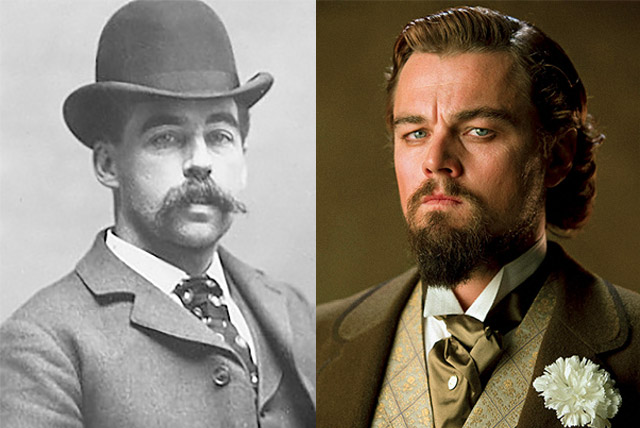
Even if you’re not a serial killer buff or horror movie fanatic, chances are you’ve heard of H.H. Holmes, the man dubbed America’s first serial killer. No relation to John. But did you know of his hotel turned “Murder Castle” or that H.H. Holmes isn’t even his real name? As Martin Scorsese and Leonardo DiCaprio begin production on an H.H. Holmes film, we delve into several weird facts about the killer that inspired it.

“The Devil in the White City”

Based on the novel, The Devil in the White City, Martin Scorsese’s current work in progress appears to be a thriller drama following the life of con-man, doctor and serial killer H.H. Holmes. As of December, Scorsese told Sun Media that the script was in the works and it appears Leonardo DiCaprio is the likely man for the part of Holmes.

DiCaprio actually owns the film rights to the book of the same name, which he acquired in 2010, and as this will be the sixth film that he has worked on with Scorsese, it’s likely that he had intentions to play Holmes all along. From Howard Hughes to H.H. Holmes, Leonardo seems perfect for the role.

This isn’t the first H.H. Holmes rendition. Evan Peters played the role of  James Patrick March in American Horror Story: Hotel. March’s sadistic character was very much inspired H.H. Holmes and they even had their own AHS version of the murderous hotel (Hotel Cortez) combined with some recent true life hotel horrors (Cecil Hotel) mixed in.

But who was Holmes exactly?

Who was H.H. Holmes?

Who was H.H. Holmes? H.H. Holmes was really Herman Webster Mudgett

The man called H.H. Holmes was actually born Herman Webster Mudgett on May 16, 1861 in Gilmanton, New Hampshire.  He had several aliases during his life, including Dr. Henry Howard Holmes, Henry Gordon and Alexander Bond. Although it was H.H. Holmes of which he appeared most fond, taking his surname from none other than detective extraordinaire, Sherlock Holmes.

Little did he know that his own story would eventually get a slot in the detective series years after his passing.  On January 8, 2017 the hit television series Sherlock featured fictional serial killer Culverton Smith who was inspired by Holmes’s grim works.

And just how grim did Holmes get? Well…

H.H. Holmes and his “Murder Castle”

Just in time for the 1893 World Fair, Holmes had a simple drug store converted into a series of apartments that he called the World’s Fair Hotel. The massive structure was three stories tall and took up the space of an entire city block. But this was no ordinary hotel.

Holmes’s hotel, (dubbed a “castle” for it’s size and later “Murder Castle” because that’s the most fitting name for it) featured 51 doorways that opened to blank brick walls, stairways that led to dead ends, 2 furnaces used for cremating bodies, 100 windowless rooms, lubricated shoots that dumped bodies into incinerators and pits of acid in the basement specifically for the disposal of human remains.

Seriously, this massive structure was built solely because Holmes wanted a murder playground. In many of the windowless, airtight rooms, Holmes had gas lines installed to suffocate guests as they slept and tunnels that were there only to dispose of bodies sight unseen. He even had a large bank vault installed just so he could lock away unsuspecting women and allow them to starve or die of oxygen deprivation.

If that weren’t enough, Holmes also had other very specific rooms built inside the hotel, including one called “The Hanging Room”, where unsuspecting hotel guests were chloroformed and strung up by their necks.

And all of this occurred directly above the drug store that Holmes kept open and running on the first floor. It’s no wonder that the Chicago “Murder Castle” made it onto TIME’s Top Ten List of Evil Lairs. And just how many people did Holmes kill inside his macabre mansion?

Where is H.H. Holmes Murder Castle?

The H.H. Holmes Murder Castle can be found at 611 West 63rd Street in Chicago, Illinois. You can check out the location, but the Murder Castle has been replaced by the Englewood Post Office. There are many stories of ghostly activity on the Murder Castle’s grounds and postal workers have some spooky stories inside the buildings. You can read more about the Murder Castle’s location, its devious architecture, and its stories here.

How many people did Holmes really kill?

H.H. Holmes Murder Castle Interior Diagram

H.H. Holmes Murder Castle Interior Diagram.

During Holmes’s reign of terror, many newspapers fell victim to so called “yellow journalism.” Yellow journalism refers to a ploy used by journalist in the 1800’s to sell more newspapers with sensational, eye catching headlines but very few facts. Basically, 19th century click bait. It just so happens that this corresponded perfectly with Holmes murder sprees.

Estimates range from 9 to 27 and even up to 200 suspected victims, although even during Holmes’s trial, questions emerged surrounding the murky details.

It is known that Holmes began his spree with simple insurance fraud. Working in a university medical lab gave Holmes access to medical cadavers, with which he began disfiguring and reporting to insurance companies. Claiming to be the beneficiary on the policy, Holmes would regularly claim life insurance funds after reporting tragic accidents that supposedly befell the corpses. This is likely what lead to many of his suspected victims (victims Holmes himself claimed credit for) re-appearing elsewhere alive and well and contributed to the confusion surrounding the actual numbers.

After having to relocate to keep suspicion down, Holmes switched up his tactics. No longer have access to medical cadavers, he began working fraudulent insurance schemes with living people. Most of these victims were women who worked for him at his drug store. Holmes insisted that his employees take out life insurance policies as a condition of working for him, and all of these policies had to list Holmes as the beneficiary. After the ink was dry, Holmes could take his time picking off unsuspecting women and claiming the funds. It was with these funds that Holmes was able to afford his lavish torture hotel.

While Holmes admittedly claimed a total of 27 lives, only nine victims were found in the hotel and Holmes was only officially convicted of one murder, that of his business partner and associate, Benjamin Pitezel.

How was Holmes finally arrested?

Marion Hedgepeth

Marion Hedgepeth, the man who turned in H.H. Holmes

Despite his murderous rampage, it was the theft of a single horse in Texas that was ultimately Holmes’s downfall.

Always looking for a new way to make money, Holmes had partnered with business associate Benjamin Pitezel to do yet another insurance scam. He convinced Pitezel to fake his own death for the $10,000 insurance payout (over $200,000 in today’s money) telling him that he would arrange for a corpse who looked like him and the two would split the money. Whether he was unable to find a lookalike corpse or whether he never had those intentions in the first place, Holmes instead simply killed Pitezel himself and claimed the funds.

He might have gotten away with it, had it not been for one scorned and very much alive partner in crime that he had bailed on. Marion Hedgepeth, a train robber and outlaw, had once been approached by Holmes to recommend a lawyer that would help out with his insurance schemes should they go awry. For his recommendation, Holmes promised him a $500 payout from his latest scheme. This payout never happened and prompted Hedgepeth to turn him over to the authorities.

While authorities originally had their doubts considering the source of information, they were able to find a warrant for Holmes’s arrest. A warrant for the theft of a horse in Texas.

Police used this horse theft to hold Holmes while they did some detective work into the more nefarious claims surrounding Pitezel’s death.

Soon after, Holmes was sentenced to death by hanging for the murder of Benjamin Pitezel.

H.H. Holmes death a conspiracy theory

Did H.H. Holmes cheat death?

It’s obvious that Holmes was a master manipulator and conman during his life, so is it possible that he managed to manipulate the very police putting him to death? Could he have pulled one last con on the courts and made his escape to the warm beaches of South America, as one former employee of Holmes’ hotel suggested?

According to some, it’s plausible.

Shortly following his death, many suspected that the hanging had all been a sham. Reports swirled about with rumors, one from Robert Lattimer, a former hotel employee who insisted he had seen letters between Holmes and his lawyer confirming his prison escape plan. Although these letters were never presented as evidence, it still garnered enough attention to merit questions.

With his wealth had Holmes managed to pay off the guards assigned to his hanging? Did he talk them into switching out his body for another inmate that was due to be executed? Could it be that this is the real reason behind Holmes bizarre burial request, in which he asked that his coffin be covered in thousands of pounds of concrete?

While this all may sound ludicrous, it’s actually gaining more media attention today than one would think. In fact, as of May 3rd, 2017 Holmes’s living relatives are currently in the process of exhuming his body just to verify that it was indeed Holmes who was put to death. DNA from his relatives have already been submitted and the act of excavating his grave has gained approval from city authorities.

In fact, if the conspiracy turns out to be true, Scorsese may have to make a new ending for The Devil in the White City.

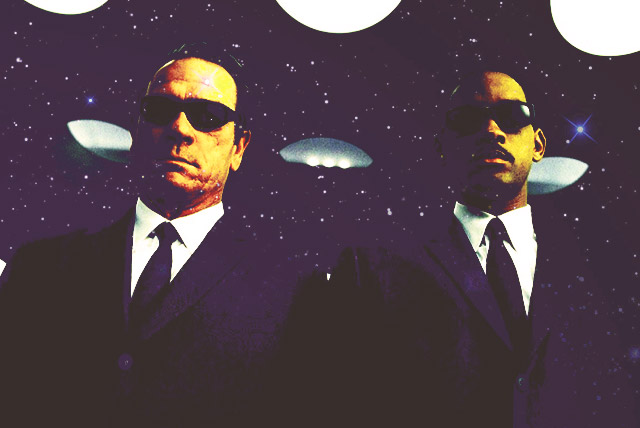
Who doesn’t love Will Smith and Tommy Lee Jones as the alien chasing duo, The Men in Black? Sure it was a light-hearted, often comical, and sometimes lightly believable, but did you know that the real Men in Black were hard hitting government operatives? Celebrate the 20th anniversary of the movie by reading the true story about the real men in black in Nicholas Redfern’s new book Men in Black: Personal Stories & Eerie Adventures. 

The Real Men in Black

The Real Men in Black

Author, cryptozoologist, and paranormal pundit, Nick Redfern exposed these hiding in plain sight agents in his books, Men In Black: Personal Stories and Eerie Adventures and Women In Black: The Creepy Companions of the Mysterious M.I.B.

Through extensive research and first-hand accounts, Redfern revealed that these government operatives have consistently attempted to silence the witnesses of UFO and paranormal phenomena since the 1950s, a far distinction from the Agent J and K characters we laughed at and spilled our popcorn over in theaters.  Are they government operatives…. guardians of the space craft… or something in between.. no one truly knows.. though many have their theories.. and interactions, always chilling and incomprehensible, abound. Everyone from UFOlogists to librarians and from students to book editors have reported an encounter that haunts them to this very day.

You can get both of Redfern’s other books The Real Men in Black and Women in Black on Amazon today.